









 TR
TR  EN
EN  AR
AR 
Yes, ice cream is one of the indispensables of the summer months, but it requires caution when considering its fat, sugar, and calorie content.
Ice cream, which can be consumed in all seasons, is a source of more energy, vitamins, and minerals compared to the same amount of milk due to its rich nutritional content.
In addition to being delicious, ice cream, which is the indispensable of almost all of us from 7 to 70, especially in the summer months, contains protein, calcium, and many vitamins and minerals such as vitamin A, vitamin B12, vitamin C, and magnesium.
Does Ice Cream Cause Weight Gain?
- If you are eating a healthy and balanced diet and doing your exercises, there is no problem in consuming ice cream. In terms of its content, ice cream is lighter than doughy and syrupy desserts.
- When we consume desserts, our blood sugar rises rapidly and then falls rapidly. As a result, getting hungry happens faster. Since the caloric value of ice cream is much lower compared to other doughy desserts like baklava and cake, it does not cause rapid changes in blood sugar as much as other desserts.
- Furthermore, if we add spices such as cinnamon and salep into it, we can eliminate the problem of getting hungry rapidly after ice cream consumption thanks to their blood sugar-regulating effects.
- One portion of ice cream contains 55% less energy than one portion of syrupy dessert and 23% less energy than one portion of milk-based dessert. For this reason, it can be an innocent choice for sweet cravings.
What Should Be Considered When Eating Ice Cream?
- Since it is a food with a high protein ratio, ice cream spoils easily, and harmful microorganisms can breed in it. Therefore, absolutely do not consume ice cream whose cold chain has been broken, that is, which has melted and refrozen.
How Should We Consume Ice Cream?
- We should make it a habit to keep the ice cream in the mouth for a short time and consume it at a temperature close to body temperature. Swallowing it by increasing its temperature helps the digestive system, preventing problems such as indigestion.
- Swallowing rapidly means the ice cream reaches the stomach at a temperature much lower than body temperature. Since this situation can lead to cramp formation in the stomach, take care to eat ice cream as slowly as possible.
Which Ice Creams Should We Prefer?
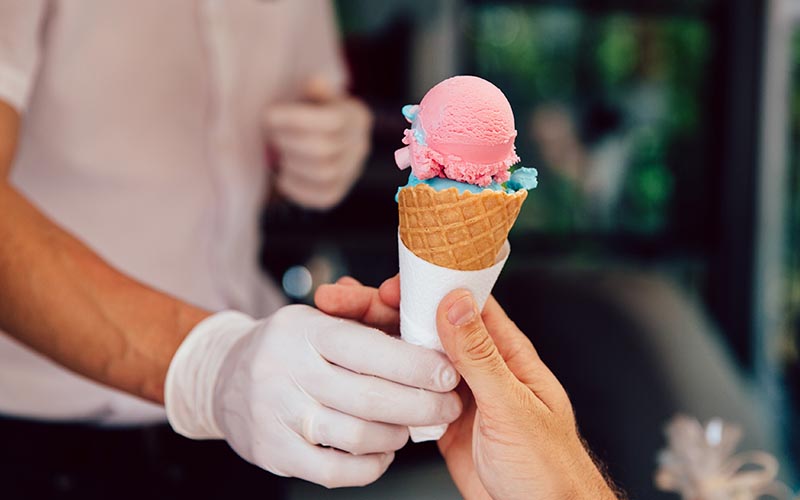
- Prefer those made from real milk and real fruits so that they can provide benefits.
- If you have diabetes, you can consider diabetic ice cream as a snack and consume it.
How Much Ice Cream Should We Eat?
- Although it is lower than many desserts, the energy of ice cream is worth considering. Its effect on your weight is related to the amount of calories consumed daily and the amount of energy expended.
- For this reason, it will be a much more accurate choice to consume it as a snack, not after meals.
- After eating ice cream, you should not eat a snack. You should eat the other foods included in your snack program at the next snack.
* You can use 2 small scoops of plain ice cream as an exchange for some snacks like ayran, yogurt, and milk.
- If you prefer to eat your ice cream in a cone, one cone is 20–25 calories.
- The 2 scoops of ice cream added to your cone are about 100 grams.
- Depending on the type of ingredients used in ice cream manufacturing, it is between 150 and 250 calories.
- Chocolate or walnuts, hazelnuts, peanuts, pistachios, coconut, and sugar sprinkles added on top to enhance the flavor increase the calories even more.
1 SCOOP OF PLAIN ICE CREAM (50 G): 104 CALORIES
| 1 scoop of plain ice cream (50 g) | 100 g | 50 g |
| Carbohydrate | 23.6 g | 11.8 g |
| Protein | 3.5 g | 1.75 g |
| Fat | 11 g | 5.5 g |
| Cholesterol | 44 mg | 22 mg |
| Calcium | 128 mg | 64 mg |
1 SCOOP OF LEMON ICE CREAM (50 G): 92 CALORIES
| 1 scoop of lemon ice cream (50 g) | 100 g | 50 g |
| Carbohydrate | 31.5 g | 15.7 g |
| Protein | 4.6 g | 2.3 g |
| Fat | 4.3 g | 2.1 g |
| Cholesterol | 0 | 0 |
| Calcium | 0 | 0 |
How to Make Fit Ice Cream?
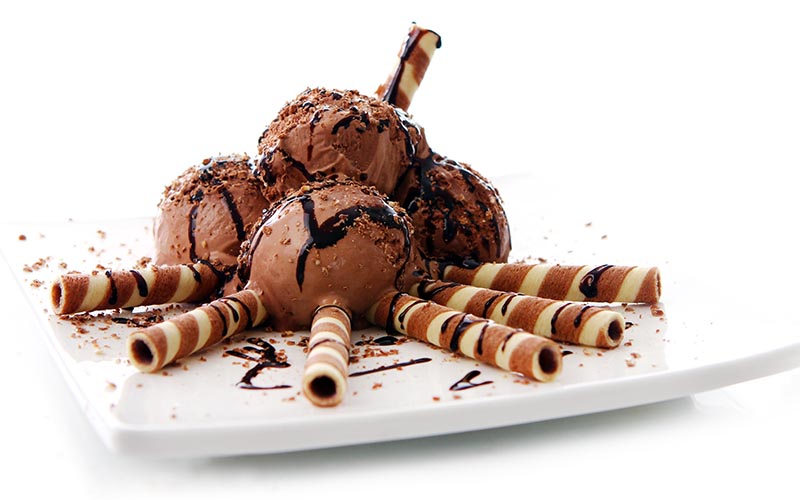
Fit Ice Cream Nutritional Values:
- Energy: 293 calories, Protein: 2 g, Carbohydrate: 67 g, Fat: 1 g
Ingredients:
– 1 banana
– Half a tea glass of lactose-free milk
– 1 dessert spoon of honey or 1 dessert spoon of organic sugar-free peanut butter
– 1 teaspoon of cinnamon
Preparation:
– We freeze the banana and put it in the deep freezer. We can take it out after a minimum of 2-3 hours, or taking it out 30 minutes before we make the ice cream will be sufficient.
– Let’s put all our ingredients in the blender and blend them.
– We can consume it immediately or put it in ice cream molds and
