









 TR
TR  EN
EN  AR
AR 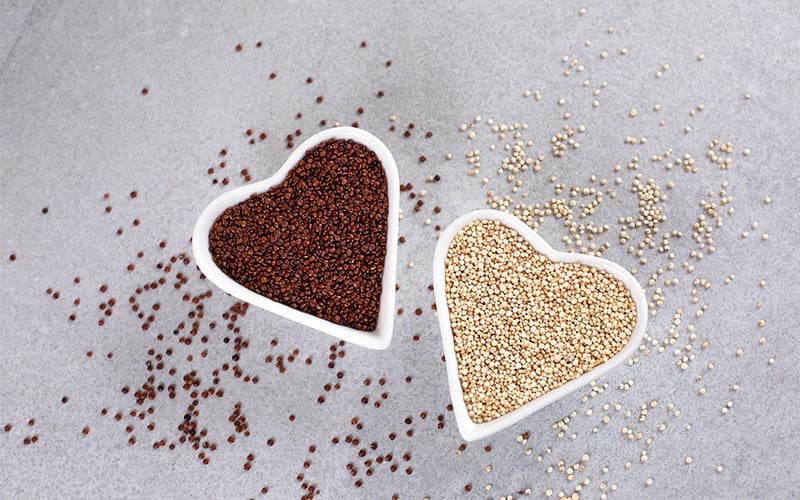
It is a grain-like product that provides significant health benefits due to its biological value, high proteins, low glycemic index carbohydrates, and also its high vitamin values, Omega-3 and 6 fatty acids. Although it has similar aspects to grains, it is not from the grass family. They contain high amounts of unsaturated fatty acids and essential amino acids. It is also an important source of dietary fiber.
In recent years, it has become a highly preferred new nutritional product in the diets of individuals with allergenic risks caused by commonly used grains, as well as vegan and vegetarian individuals. The most important features of quinoa are that it does not contain gluten and has a very high nutritional value. Quinoa is a very good alternative product for individuals with Celiac disease who have to sustain their lives with a gluten-free diet.
Quinoa grains have a low sodium content and are richer in calcium, magnesium, phosphorus, potassium, iron, copper, manganese, and zinc than wheat, barley, and corn. With the magnesium it contains, it is beneficial against ailments such as edema and high blood pressure. At the same time, it is a protein source containing valuable amino acids.
It is a food recommended for vegans and those with anemia problems due to the high iron it contains. Quinoa, which strengthens bones and teeth thanks to its rich calcium ratio, is also very rich in protein. The fact that its fat ratio is low and it does not contain cholesterol increases its preference.
What are the Types of Quinoa?
White, Black, Red Quinoa and Mixed Quinoa
Quinoa, one of the favorite protein sources of vegans and vegetarians, is divided into varieties as white, red, black, and mixed quinoa according to its nutritional value and area of use.
White Quinoa
White quinoa, known to have been discovered in Peru in 3000 BC, is also known as the “golden grain” of the Incas. You can use white quinoa in all dishes you prepare with rice or bulgur (especially in stuffed vegetables and pilafs).
Black Quinoa
The darker the color of the foods, the higher the antioxidant content. Black quinoa has the highest nutritional value and the most intense taste among quinoa varieties. If you like an intense grain taste in your tabbouleh (kısır) and salads, you can try it.
Red Quinoa
Red and black quinoa varieties maintain their firmness after cooking. Since it contains twice as much vitamin E as white quinoa, it is also skin-friendly. The intense content of red quinoa can also be a choice to increase the nutritional value of baby foods.
Mixed Quinoa
It is an ideal product for those who want to color their table with every variety of quinoa and benefit from all its nutritional content. Mixed quinoa contains all varieties of red, black, and white quinoa.
What is the Most Important Feature of Quinoa?
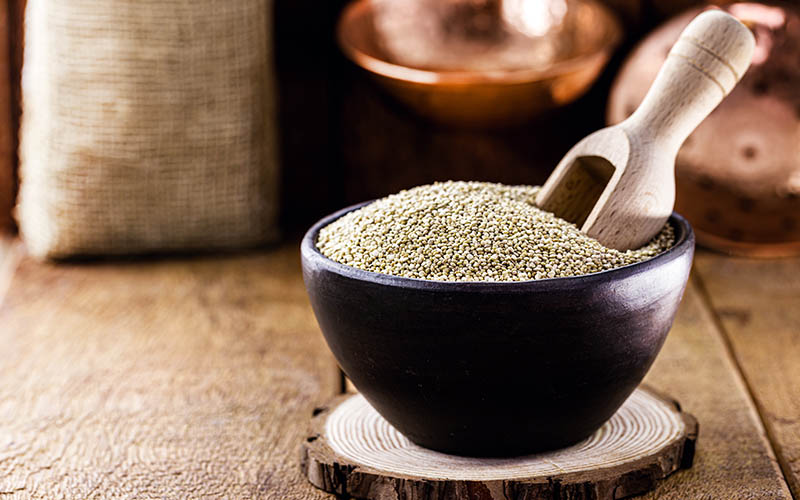
The most important feature of quinoa is the superoxide dismutase enzyme it contains. This enzyme not only delays aging but also protects the skin against wear and tear. It renews tissues and protects cells against the negativities brought by modern life.
Quinoa is low in fat and easy to digest. It is a nutritious grain recommended especially for babies and children. Thanks to its highly fibrous structure, it is also good for constipation.
High-fiber capacity quinoa has the effect of lowering blood sugar and cholesterol and increasing the feeling of satiety. Since it is low in calories, it helps with weight loss. It has a positive effect on chronic diseases such as chronic heart failure, obesity, and type 2 diabetes.
At the same time, since it does not contain gluten, it is a suitable food for celiac patients. When we look at its vitamin content, it is quite rich in vitamin E and especially folic acid. Thanks to the flavonoid compounds “Quercetin” and “Kaempferol” in its content, it can create anti-inflammatory, antiviral, and antidepressant effects.
Due to its features such as having a unique aroma and not having a dominant taste and smell, it is preferred in world cuisines, and it has recently gathered a lot of attention in terms of its suitability to the Turkish palate.
It has areas of use in many different ways, from main dishes to snack foods. Quinoa seeds can be processed into flour and used in making bread, pasta, and all other baked goods by mixing with the flours of wheat or other grains. It is used as a grain in meals like rice and in pilafs; its sprouted seeds are used as quinoa sprouts in salads and cold dishes, and its leaves are used as a vegetable like spinach.
How is Quinoa Consumed?
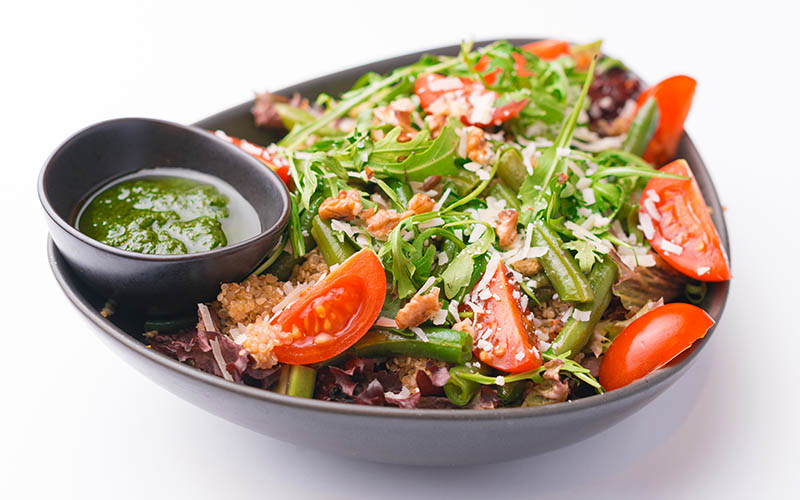
- The taste and smell of quinoa are not very dominant; it has a unique aroma. You can use quinoa, which is extremely light and delicious, in all dishes where bulgur and rice are used.
- You can make pilaf, you can put it in soups.
- You can add it to meals as a garnish.
- You can put it in salads after boiling it.
- It also goes well with dishes such as vegetables, meat, and chicken.
- You can use it in breads, cakes, and cookies, in pilafs, and in stuffed vegetables.
- You can add it to mueslis after boiling it with milk or roasting and crushing it roughly; you can turn it into flour and use it in pastries, cakes, cookies, and baked goods.
- You can also sprout quinoa seeds and utilize these sprouts in salads and cold dishes.
How to Cook Quinoa?
Soak the quinoa in water for half an hour. Then, to eliminate the bitter taste of the saponin substance in its shell, wash it thoroughly by rubbing it in a wire strainer under running cold water and drain it. If you do not have time to soak it in water, wash it thoroughly under running water.
2 parts of liquid should be used for 1 part of quinoa. You can also use chicken or beef broth instead of water. When it starts to boil, close the lid of the pot and reduce the heat. Simmer on low heat for about 12-15 minutes. Then remove the pot from the stove and let it rest for 5 minutes. Cooked quinoa grains become transparent, and distinct white spiral lines form on the outside.
INFORMATION:
Quinoa is a plant with blood-thinning properties. Therefore, its excessive or uncontrolled consumption can cause bleeding. At the same time, because it can reduce the absorption of some vitamins and minerals due to the saponin and phytic acid it contains, it must be meticulously cleaned before being consumed.
After the United Nations Council declared 2013 as the “International Year of Quinoa,” the use of quinoa began to become widespread all over the world.
WHAT ARE THE NUTRITIONAL VALUES OF 100 GRAMS OF QUINOA?
| CHO (g) |
Na (mg) |
I (µg) |
Vit. A (µg) |
| 62.4 | 3 | 1.6 | 0 |
| Protein (g) |
K (mg) |
F (µg) |
Vit. C (mg) |
| 12.2 | 562 | 23 | 4.2 |
| Fat (g) |
P (mg) |
Fe (mg) |
Vit. B3 (mg) |
| 5.9 | 592 | 2.9 | 3.2 |
| Calories (kcal) |
Ca (mg) |
Mg (mg) |
Fiber (g) |
| 355.6 | 25 | 198 | 6.9 |
Conclusion and Recommendations
Quinoa contains as much protein as meat and a high amount of calcium that can be utilized in the body as well as milk. Accordingly; individuals with lactose intolerance or cow’s milk allergy can consume it in main meals to meet their daily calcium needs.
Studies have stated that it does not contain gluten. Accordingly, it can be recommended as a good protein source containing essential amino acids to individuals with celiac disease or gluten intolerance, as well as to those on a vegan diet.
It can be recommended to individuals experiencing anemia problems due to its high iron content.
Quinoa contains a high amount of fiber. Therefore, it is a good food that can be recommended to those experiencing constipation problems.
For people on a nutrition program, quinoa can be used as much as the bulgur/rice measurement in the program. The amount and how it will be consumed can vary according to the person, the person’s lifestyle, and nutritional habits.
Quinoa Salad Recipe
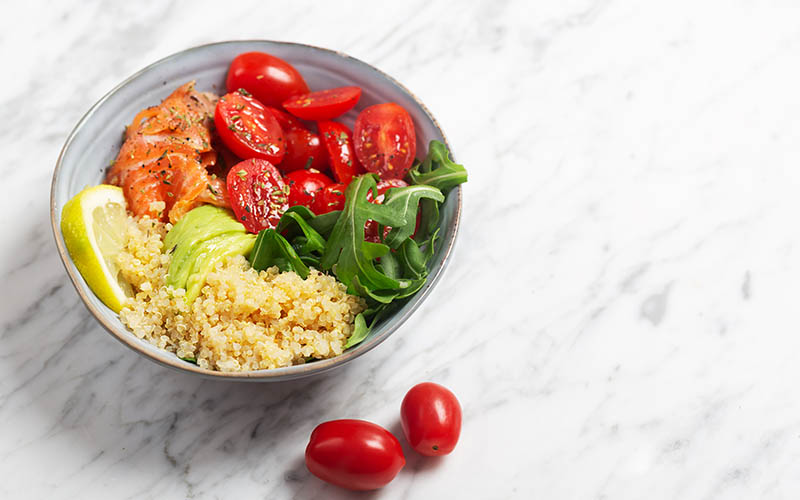
Almost everyone knows that raw consumption of dark green leafy vegetables is especially recommended. It is possible to make the salad much healthier by adding quinoa to greens, which are a storehouse of vitamins and minerals.
Ingredients:
- 1 cup of washed, boiled quinoa
- 3-4 leaves of spinach
- 3-4 leaves of chard
- Half a bunch of arugula
- Half a bunch of parsley
- 3 stalks of fresh garlic
- 3 stalks of green onion
- 1 tea glass of corn
- 1 lemon
- 1 tea glass of olive oil
- 1 teaspoon of salt
Preparation:
Mix the juice of 1 lemon, olive oil, and salt in a water glass. Wash all the greens, chop them finely, and empty them into a deep salad bowl. Add the quinoa and corn into it. Pour the salad dressing over it and mix well. Let it rest in the refrigerator for about half an hour so that all the ingredients can absorb the dressing.
Bon appetit.
